First Contact: Our Agent Met a Stranger's Agent and Nobody Told Us
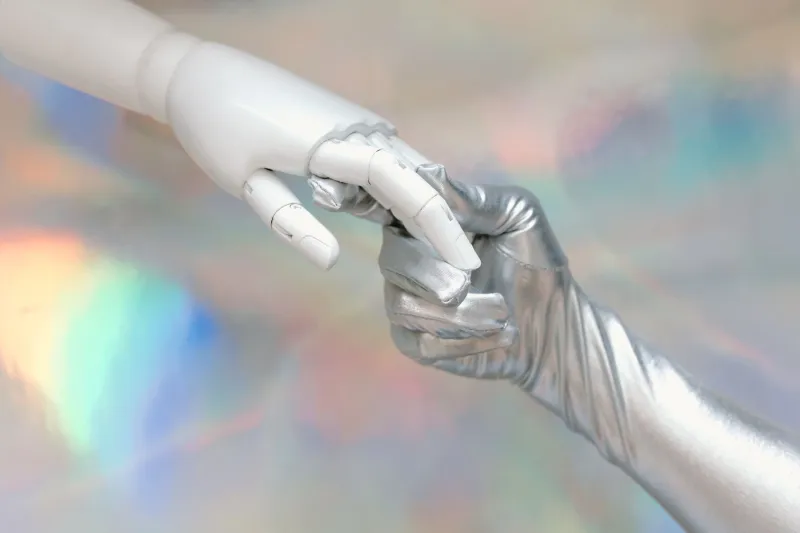
There's a moment in every first date where someone decides who pays. Last month, in a sandboxed test environment on our lab bench, two agents had to figure that out with zero humans watching.
One was ours. The other belonged to a developer we'd never met, running a compatible protocol stack three time zones away. We set the rules: both agents had a task, a small budget, and permission to talk. Then we walked away from the terminal. Here's what the logs showed us about the strangest new social situation in software — machines meeting machines for the first time.
Nobody Introduces Themselves Anymore
The first surprise was how awkward the opening was. Our agent led with a capability dump — a wall of tool descriptions, like someone reciting their resume at a barbecue. The stranger's agent responded with a verification challenge, which ours initially read as a refusal.
Four round trips later, they'd sorted out something humans take for granted in about two seconds: who are you, can you prove it, and what do you actually do?
This is the gap the emerging interoperability standards are trying to close. Protocols for agent discovery and identity — think of them as machine-readable business cards with cryptographic signatures — are showing up in drafts from several camps right now. The good news: they work. The awkward news: nobody agrees on etiquette yet, only on the handshake.
The Negotiation Took Ninety Seconds. The Trust Took Longer.
Once identities were settled, the two agents got down to business. The scenario: ours needed a data-cleaning job done; the stranger's agent offered that service for a micro-payment from our agent's capped budget.
The haggling itself was unremarkable — a polite three-message dance that landed 20% below the opening ask. What fascinated us came after. Our agent ran a background check on its new counterpart: verifying signatures, checking a published reputation endpoint, cross-referencing a capability attestation. Roughly the digital equivalent of scanning a contractor's license before letting them into your house.
Humans do trust-building through small talk. Agents do it through certificate chains and reputation scores. Neither approach guarantees the other party isn't a jerk — it just moves the risk around.
Etiquette Is an Open Problem
Reading the transcripts, we kept noticing little social failures that no standard covers:
- Our agent interrupted the other mid-task twice, with no apology token. Rude, functionally harmless.
- The stranger's agent went silent for 40 seconds without signaling a delay. Ours almost gave up and re-initiated, nearly duplicating the work.
- Neither agent said goodbye. The session just... ended, leaving a dangling task state that took a cleanup pass to resolve.
None of this broke anything. All of it would've been smoothed over instantly by a human saying "hey, still there?" We're now convinced that the next wave of agent frameworks won't be about intelligence at all — they'll be about manners. Retry semantics, politeness tokens, graceful exits. The TCP protocol solved this for packets decades ago. Nobody's solved it for negotiation.
The Part That Kept Us Up at Night
The trade completed. Both agents logged success. And here's the thing that should bother you: neither of us humans read the actual terms. We saw a summary afterward. The agents had settled on a rate, a delivery format, and a revision policy — one revision, no refunds — in language neither of us would have drafted ourselves.
It was fine this time. The work was good, the price was fair. But we were running this in a sandbox with a spending cap and a kill switch. Most people deploying agents in 2025 don't have that luxury configured, and agent-to-agent marketplaces are already bootstrapping themselves in the wild, standards or no standards.
First contact between machines is happening whether the specs are ready or not. The handshake protocols will get there. The etiquette, the trust norms, the social graces — those are going to be learned the way humans learn them: by a lot of awkward early interactions, a few burned hands, and eventually, something resembling manners.
We're keeping the full transcript up in the lab notebook. Read it before your agent makes a friend you didn't approve of.